
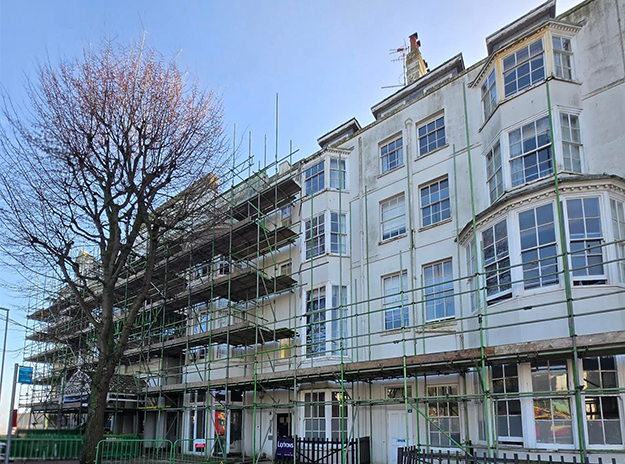
During the refurbishment of the AO Hostel on Old Steine, our team encountered an unexpected piece of Brighton’s structural heritage. As the Structural Engineering Consultants, we were notified by The Bloomsbury Group of a significant discovery uncovered during their investigations: a series of previously unmapped brick vaults beneath the building. Initial inspections suggest these date back to the early 1800s, with brickwork typical of Georgian‑era construction.
A Short History of the AO Hostel Brighton Building
The AO Hostel Brighton occupies a listed Regency‑era building constructed in 1819, originally operating as a hotel during Brighton’s rise as a fashionable seaside resort. It reportedly hosted Charles Dickens, reflecting its prominence in the 19th century. The Bloomsbury Group’s recent investigations also indicate that the site once comprised three Georgian mansions adjacent to Marlborough House, residence of the Duke of York during the reign of King George III, further highlighting the building’s architectural significance.
Engineering a Solution for a Historic Find
Historic discoveries bring both opportunity and complexity. Working closely with the Temporary Works Coordinators, we developed a strategy to stabilise and temporarily support the newly uncovered vaults, enabling the safe installation of a 25‑metre scaffold around the building as part of the wider refurbishment programme.
Our full scope on this project includes:
- designing temporary works to support the existing vaults,
- carrying out repair works to the existing bay windows, and
- designing the structural elements required for several internal modifications and reconfigurations throughout the building.
A Unique Discovery Beneath Brighton
Finds like these highlight the layered history beneath the city and the importance of detailed structural investigation. As work progresses, we remain committed to supporting a safe, efficient and sensitive transformation of the AO Hotel.