
Robert Lockhart, a senior engineer in Manchester, sharing his knowledge and experience on post-tensioned slabs.
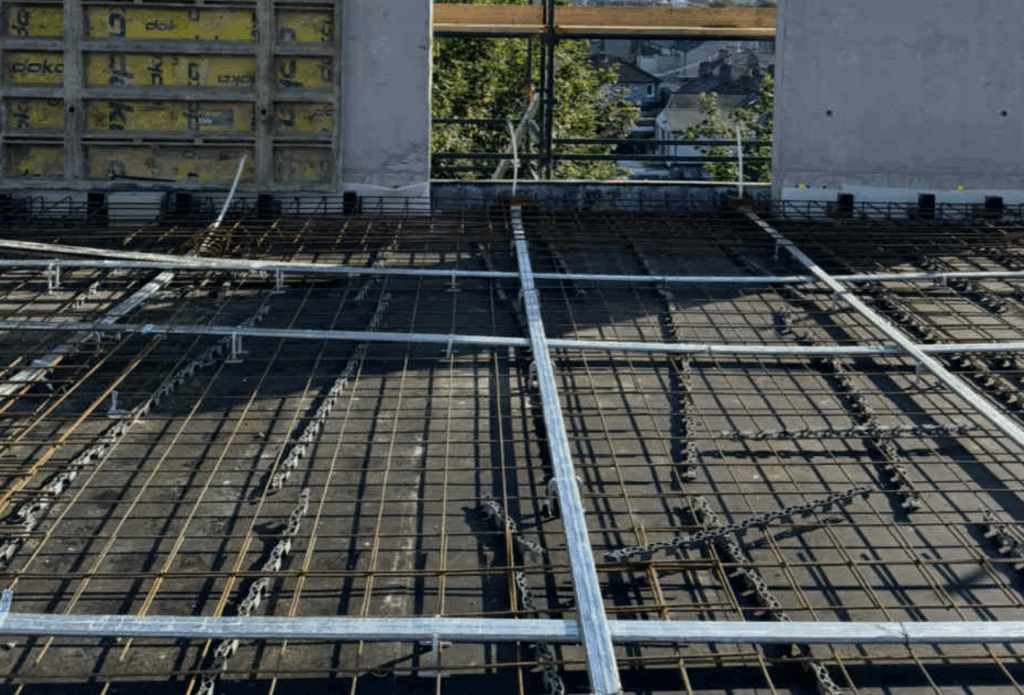
Post-tensioned (PT) slabs offer significant advantages for modern construction. By enabling longer spans and thinner floor plates, they reduce structural depth and give architects greater flexibility in design.
In recent projects, I’ve seen PT systems to be invaluable in resolving deflection challenges, especially in large open-plan commercial floors where conventional reinforced concrete would have required deeper slabs or additional columns.
One of the key benefits I’ve found is improved long-term durability and reduced cracking, which is especially important in car parks and mixed-use developments. However, PT design isn’t without its challenges. Service penetrations must be carefully coordinated early on, as tendon layouts limit where openings can be placed – making collaboration during the design phase essential.
The good news? Advances in PT design software and tendon-layout optimisation now make it easier to model long-term behaviour, including creep, shrinkage, and vibration performance. From a sustainability perspective, PT systems help cut embodied carbon by reducing concrete volume and reinforcement weight.
Here’s a question worth exploring: Should PT be used more in mid-rise residential developments, or are the constructability challenges and service limitations still making it too restrictive?
We’d love to hear your thoughts! What’s your experience with PT systems?